



New York MTA Identifies $427M in 2024 Proposed Budget Savings
The MTA is ahead of schedule toward identifying $500 million in savings annually beginning in 2025.

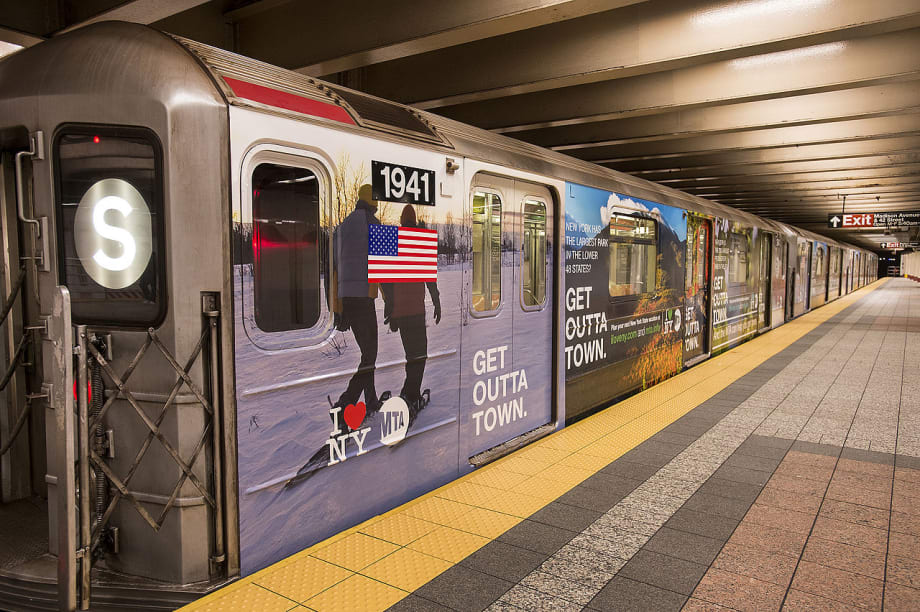
While New York MTA paid ridership on subways and commuter railroads continues to increase in accordance with the midpoint scenario as projected by the consulting firm McKinsey, paid bus ridership is now trending below the low case scenario.
Photo: New York MTA
New York’s Metropolitan Transportation Authority (MTA) released its preliminary operating budget for 2024, the second of five years to have a projected balanced budget.
The November Financial Plan outlines $427 million in operating efficiencies, exceeding the target of $400 million in savings as projected in the July Financial Plan. The MTA is ahead of schedule toward identifying $500 million in savings annually beginning in 2025.
The MTA’s Budget Savings
The MTA has identified specific savings across all its agencies, delivering on its promise in the New York State Budget agreement of achieving $400 million in savings in annual operating efficiencies. These savings include improving employee availability while reducing overtime costs by strategically managing assignments within compliance of timekeeping rules within New York City Transit.
Identified efficiencies within Long Island Rail Road and Metro-North Railroad include collaborating to identify best industry practices in equipment shops and ensuring appropriate inventory availability for required maintenance. Bridges and Tunnels reviewed staffing requirements, reducing vacancies. These efficiencies together will save the MTA $427 million in 2024, going beyond what was promised in the New York State Budget.
“Governor Hochul’s State Budget stepped up for the MTA and — more importantly — for transit riders. One key element was an agreement that the MTA implement $400 million in operating efficiencies, and the 2023 November Financial Plan delivers — the cost savings surpass our 2024 goal and set us on a path to achieve $500 million in annual recurring savings by 2025,” said MTA Chair and CEO Janno Lieber. “Fiscal stability allows us to continue to deliver frequent, reliable service while executing our historic capital program, including unprecedented investments in State of Good Repair work and ADA accessibility.”
Ridership and Tolls
While paid ridership on subways and commuter railroads continues to increase in accordance with the midpoint scenario as projected by the consulting firm McKinsey, paid bus ridership is now trending below the low case scenario. Crossings at MTA Bridges and Tunnels continue to track at or above pre-pandemic levels.
In July, the board approved a 5.5% toll increase and 4% fare increase for 2023, which went into effect in August. Those moves are projected to generate $117 million in 2023. The five-year plan assumes an additional 4% increase in both 2025 and in 2027.
More Management

METRO Opens Submissions for 2026 Motorcoach Awards
Nominations are now being accepted for METRO Magazine’s Operator of the Year and Innovative Operator of the Year awards.
Read More →
New York MTA Advances Final Contract for Second Avenue Subway Expansion
Contract Four is the largest in the Second Avenue Subway Phase 2 project and includes construction of station infrastructure, tracks, and signals for the subway expansion, MTA officials said. Work on Contract Four will begin in 2027.
Read More →
Transit Agencies Highlight Safety Gains at National Summit
Leaders from 15 major transit systems shared crime-reduction results and safety initiatives while discussing the role of continued federal support.
Read More →

NITA Names New Leadership, Expands Reduced-Fare Program at First Board Meeting
The new regional transit authority appointed its first board chair and interim executive director while extending reduced fares across CTA, Metra, and Pace for eligible riders.
Read More →
Beyond the Checklist: A Structured Approach to Transit Maintenance
Reliability-Centered Maintenance helps transit agencies move beyond routine checklists to focus limited resources on the assets and failures that have the greatest impact on safety, reliability, and service.
Read More →
APTA 2026 Nominating Committee Selects Leadership Slate, Names Chair and Vice Chair Nominees
Leadership changes will help shape the association’s priorities and its representation of the transportation industry during the 2026–2027 term.
Read More →
DART Launches Major Security, Fare Enforcement Initiative
The 90-day demonstration will deploy coordinated security teams at five light rail stations while testing controlled access and gathering data to guide future investments.
Read More →
Advancing Fare Collection Through Technology and Innovation
Learn about delivering 1300 gates at 91 stations while managing fare evasion. Explore the large scale deployment, solution customization and real-world results that affect the region. Prepare for deployment in your region now.
Read More →
Game Day in Motion: Moving Millions During the 2026 World Cup
Between packed transit stations and team motorcoaches, see how agencies and operators across North America tackled the transportation demands of the 2026 FIFA World Cup.
Read More →
Surface Transportation Extension Averts Shutdown, Leaves Transit Funding Gap
The stopgap keeps federal transportation programs moving, but missing advance funding could complicate the transit and rail projects agencies are planning next.
Read More →