Infrastructure Storytelling with Grant Writing: Current Trends and Challenges
Successful grant writing requires a multidisciplinary team to cover a wide variety of topics. The dream team includes planners, engineers, modeler economists, and graphic designers.
by Patricia Macchi
October 30, 2023
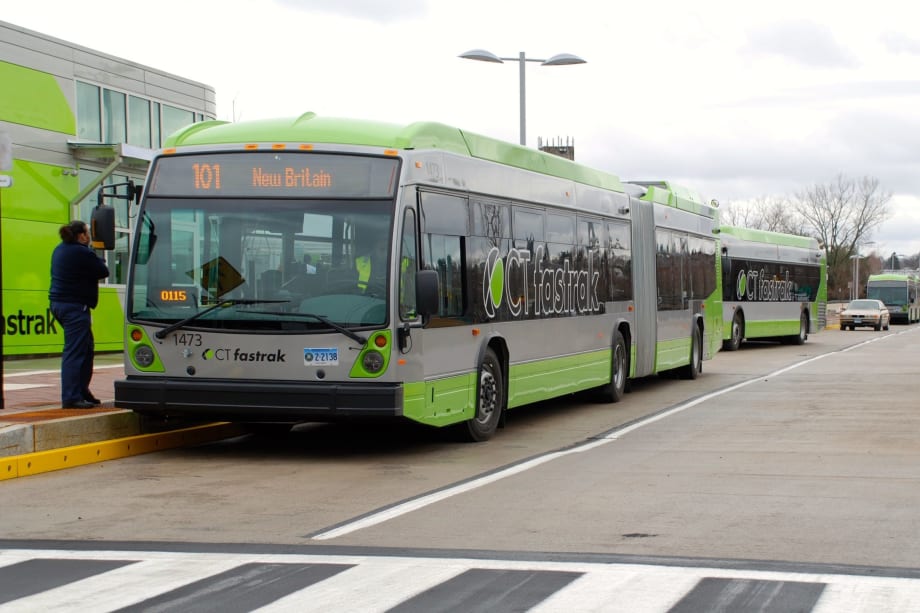
STV recently supported Connecticut Department of Transportation’s $25 million RAISE application to build a new BRT system in New Haven.
Photo:STV
5 min to read
Since the start of 2022, we have witnessed a generational shift in how states and local governments obtain funding for infrastructure programs of all sizes.
The passage of the Infrastructure Investment and Jobs Act (IIJA) alone has created $550 billion in new spending for projects like highways and bridges, freight rail, public transit, safety, ports and aviation, and water, as well as emerging technologies like zero-emission vehicles. Independent of the IIJA, several states have also set aside significant dollars for infrastructure improvement programs. As a result, there are more opportunities for state and local agencies to obtain grants — making the process more competitive.
Ad Loading...
Successful grant writing requires a multidisciplinary team to cover a wide variety of topics. The dream team includes planners, engineers, modeler economists, and graphic designers. This diversity of expertise helps a team approach complex problems from multiple angles, while also fostering innovation, increasing the practical applicability, and mitigating risks.
Whether agencies and organizations are writing grant applications in-house or tapping a consultant to support, the team must develop a strategic approach with the goal of drafting compelling narratives focused on the impact of infrastructure improvements for the community.
The Biden administration has placed significant value on projects that currently, or are planning to, involve and engage the community in the decision-making process.
Photo:STV
Data is Driving Results
One of these strategies is to use data-driven storytelling in grant writing to build a compelling case for funding, demonstrate impact and accountability, and tailor the application to the specific interests and strategic goals of the agency or department that is providing the funding. This approach enhances the credibility of the application because it allows the applicant to benchmark it against similar proposals, while showcasing the commitment to making a meaningful difference in the community. It also shows a commitment to long-term planning and a clear plan for ongoing measurement and improvement.
Earlier this year, the Virginia Railway Express (VRE) received more than $20 million in state grants from the Northern Virginia Transportation Commission and Potomac and Rappahannock Transportation Commission for two projects: a new $18.8 million station at Crystal City and $1.5 million to fund improvements connected to the larger Amtrak Step-Up program, which allows VRE multi-ride ticket holders to ride on select Amtrak trains for an additional charge. Both grants were supported by detailed data modeling to estimate future throughput, travel time savings, and regional economic impacts.
Assessing the needs of the community is not only important, but often a fundamental requirement in successful grant writing. It ensures that an application is responsive to the real challenges and aspirations of the community, increases the likelihood of funding, and sets the stage for a project that can truly make a positive difference in the lives of the community.
Ad Loading...
The Biden administration has placed significant value on projects that currently, or are planning to, involve and engage the community in the decision-making process.
The recently awarded $1.2 million FRA Railroad Crossing Elimination planning grant for Durham County, in North Carolina, is a testament to the importance of engaging the community to address safety concerns. The project includes an equitable community engagement effort to facilitate the selection of a preferred solution that is responsive to the needs of the residents and businesses of this area.
Risk mitigation strategies strive to ensure the success and sustainability of a project, enhances an applicant’s credibility, and demonstrates commitment to accountability and responsible project management. By proactively addressing risks, including contingency plans, the applicant is demonstrating a willingness to adapt, as well as the necessary flexibility to respond to changing circumstances or unexpected events.
Effective risk mitigation gives funders confidence that taxpayer dollars will be managed effectively and that the program’s goals will be achieved. STV recently supported Connecticut Department of Transportation’s $25 million RAISE application to build a new bus rapid transit (BRT) system in New Haven. The application included a healthy contingency and incidentals line items in the project cost, reducing the overall project risk.
Incorporating long-term sustainability considerations into a grant proposal shows a commitment to creating lasting change and maximizing the impact of grant funds. Sustainable projects often have models that can be scaled up or replicated in other communities or regions. This can attract additional funding and partnerships, further expanding the project's impact.
Ad Loading...
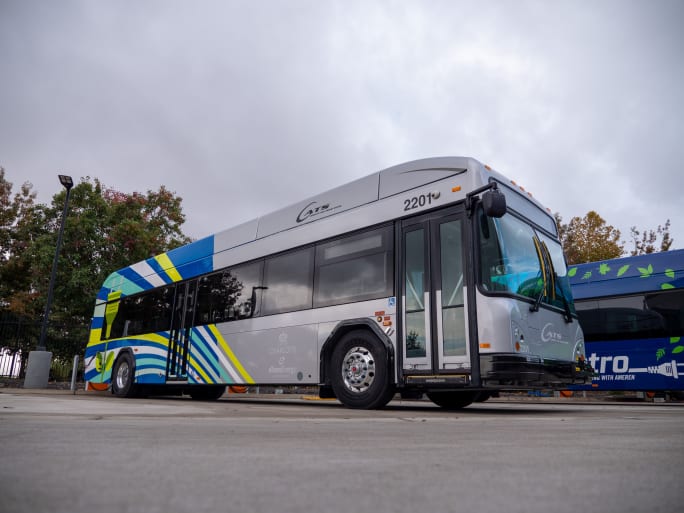
To that end, the Charlotte Area Transit System in Charlotte, N.C., and Hampton Roads Transit in Virginia, are receiving $30 million and $25 million from the FTA, respectively, to procure battery-electric and hybrid-electric diesel buses and build a new zero-emissions facility.
Earlier this year, the Virginia Railway Express received more than $20 million in state grants from the Northern Virginia Transportation Commission and Potomac and Rappahannock Transportation Commission for two projects.
Photo:JimTetro/STV
Finding Efficiencies
While supporting a client through a successful grant application is immensely satisfying, this is a process that is not without its challenges. Identifying grant opportunities can be time-consuming, especially for organizations with limited resources.
However, there are several strategies that can be leveraged to streamline the process and more effectively manage grant opportunities. For example, I particularly find the most successful strategies include developing a grant calendar, engaging in advance with a grant writing team to support the technical team, and embracing collaboration and partnerships. Finally, it’s worthwhile to resubmit the application several times, not only to the same opportunity, but also to other grant funding sources.
Additionally, grant applications are becoming more detailed and complex. This trend is driven by several factors, including increased competition for limited funding and the desire of grant makers to ensure that their investments are used effectively and have a measurable impact.
As a result, the sooner an applicant starts to plan, the better. If there is previous guidance available about a specific program, applicants should review that first. And, applications should pay close attention to any specific requirements, eligibility criteria, and evaluation criteria. And of course, always go back to the guidelines before submitting.
Ad Loading...
But even with these challenges, one of the common threads that connects successful grant applications comes back to good storytelling. It’s all about leveraging data and research to create an application that is both compelling and appealing to reviewers, while also addressing all relevant aspects of the project. With that approach, state and municipalities can help move their communities closer to developing impactful infrastructure.
About the Author: Patricia Macchi leads STV’s National Transportation Economics & Grant Management practice. She is a seasoned Project Manager with more than 20 years of experience in benefit-cost analysis, economic impact assessments, economics and financial modeling, and funding of infrastructure projects for a variety of modes.
Contract Four is the largest in the Second Avenue Subway Phase 2 project and includes construction of station infrastructure, tracks, and signals for the subway expansion, MTA officials said. Work on Contract Four will begin in 2027.
The new regional transit authority appointed its first board chair and interim executive director while extending reduced fares across CTA, Metra, and Pace for eligible riders.
Reliability-Centered Maintenance helps transit agencies move beyond routine checklists to focus limited resources on the assets and failures that have the greatest impact on safety, reliability, and service.
The 90-day demonstration will deploy coordinated security teams at five light rail stations while testing controlled access and gathering data to guide future investments.
Learn about delivering 1300 gates at 91 stations while managing fare evasion. Explore the large scale deployment, solution customization and real-world results that affect the region. Prepare for deployment in your region now.
Between packed transit stations and team motorcoaches, see how agencies and operators across North America tackled the transportation demands of the 2026 FIFA World Cup.
The stopgap keeps federal transportation programs moving, but missing advance funding could complicate the transit and rail projects agencies are planning next.