4 Questions to Ask before Investing in Microtransit
Cities can build a better version of the bus — one that operates dynamically, without routes and schedules, but still promotes shared trips to cut down on congestion.
by Dillon Twombly
January 13, 2020
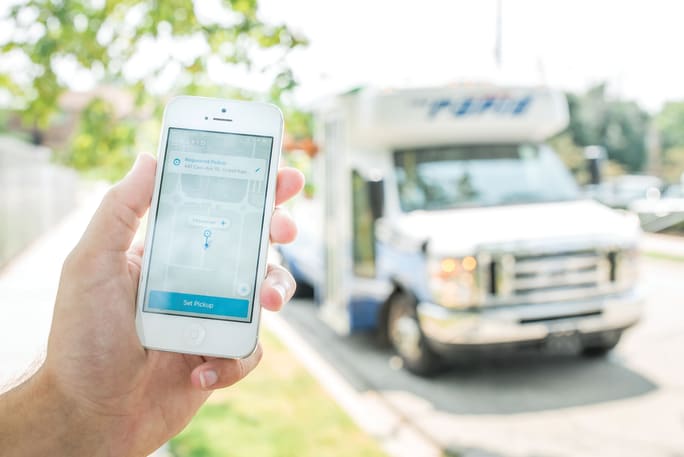
Investing in new mobility technology via a public-private partnership can help create first- and last-mile connections to transportation hubs.
Photo: Via
5 min to read
The world is undergoing a transportation revolution as cities, transit agencies, private companies, and even universities expand their commitment to and investment in microtransit.
The idea of developing a custom on-demand public transit network has its appeal anchored in an age where traffic congestion is at an all-time high and transit ridership continues to fall. Overall, public transportation ridership in the U.S. declined by nearly 5% over the last decade, driven by a cumulative 15% decline in bus ridership over the same period, according to KPMG’s Accelerating Mobility Study.
Ad Loading...
The reason may be that the appetite for on-demand ride-hailing has reached a fever pitch, and when managed improperly, cities are paying the consequences. A traffic congestion study commissioned by Uber and Lyft revealed the companies account for up to 14% of vehicle miles traveled in some cities, a reason why cities like New York are passing legislation directly aimed at how often cars cruise without passengers.
The growing interest in microtransit, however, has transportation leaders blending the best of both worlds by leveraging technology to build the public transportation of tomorrow. By recognizing that a new generation of riders wants to travel on-demand, cities can build a better version of the bus — one that operates dynamically, without routes and schedules, but still promotes shared trips to cut down on congestion.
Before pulling the trigger, however, decision-makers should ask themselves the following questions:
What are the Specific Goals?
Before doing anything, it’s important to frame the challenges that microtransit is going to solve. What is the pressing need for this type of service? King County Metro in Seattle invested in microtransit as a first- and last-mile link to five of its light rail transit hubs where parking and alternative means of transit were both sparse. In Newton, Mass., city leaders were specifically interested in increasing mobility for the city’s senior population, so they developed a program catering to residents over 60-years-old.
Whether it’s increasing public transportation ridership, decreasing congestion, reducing the number of vehicles parked at local transit hubs, or giving residents a more accessible way to travel, it’s important to have measurable goals before launching your microtransit service.
Ad Loading...
The growing interest in microtransit has transportation leaders blending the best of both worlds by leveraging technology to build the public transportation of tomorrow.
Photo: Via
How Will You Use The Data?
Investing in new mobility technology via a public-private partnership can help provide more convenient paratransit, eliminate transit deserts, create first- and last-mile connections to transportation hubs, and replace underutilized and inefficient bus routes — all while improving the environment by getting people out of private cars and away from single-occupancy vehicle trips.
Beyond the visible benefits, such partnerships also generate a treasure trove of data, giving transit authorities and operators a completely new vantage point into their communities’ specific needs. This data can help leadership make major improvements to their overall transit system, understanding where to shift resources to better serve riders, where to put a protected bike lane, or what low-income neighborhoods should have the most affordable public transit.
However, not every mobility technology company has always taken a collaborative approach to sharing rider data with cities and transit operators.
Public transport authorities and operators (PTAs/PTOs) should partner with companies that will share robust data to help inform important decisions, faithfully comply with regulations, and protect customer privacy. As the transportation landscape continues to evolve, finding a mobility partner that is willing to share data to improve public transit is just as important as finding one that is serious about data security.
How Will You Measure ROI?
Transportation professionals already know that operating quality public transit is an expensive endeavor. For each dollar spent in operating costs per trip across all modes and all transit systems, an average of 19.2 cents are recovered through fares, according to Boston Consulting Group’s 2019 report, "On-Demand Transit Can Unlock Urban Mobility."
Ad Loading...
Microtransit can enable a more efficient allocation of resources in areas with under-performing fixed routes, low population density, or logistically difficult to serve areas. Providing a sufficient return on investment, however, is about much more than simply evaluating the farebox recovery ratio.
On-demand microtransit networks address a huge variety of underlying community issues, so it’s important to measure ROI through a broader lens. Efficient transportation provides residents reliable access to jobs, shrinks cities, improves quality of life, and helps eliminate things like food deserts.
You shouldn’t have to live in Manhattan, or be lucky or rich enough to live near a subway line or well-served bus line, to have access to high-quality, convenient, and affordable public transportation. Cities and transit agencies are increasingly turning to technology to facilitate their mandate of providing accessible and equitable transportation to the rider populations they service.
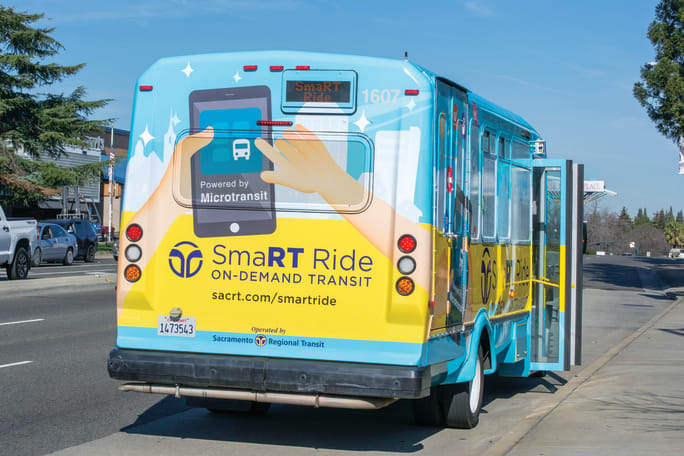
Microtransit can enable a more efficient allocation of resources in areas with under-performing fixed routes, low population density or logistically difficult to serve areas.
Photo: SacRT
What Happens if You Do Nothing?
Public transportation ridership, along with the associated revenue, continues to decline and is leading to increasingly challenging budget and transit situations for many cities. This trend underpinned by demographic changes in public transit ridership and usage along with changing rider expectations is one that cities are increasingly trying to reverse. Microtransit and the accompanying data, flexibility, and digitization it allows give the public sector one of many tools it can use to blunt these declines.
For most cities, the do-nothing scenario ends with more congestion, more vehicle emissions, and less equity for residents. Good public transportation is about so much more than traffic; it’s about impacting job opportunities, safety, and overall quality of life for residents. When doing nothing is no longer an option, it’s time to consider what’s next.
Ad Loading...
About the Author:Dillon Twombly is Chief Revenue Officer at Via
Through its NAVI program, JTA is showing how autonomous vehicles, intelligent infrastructure, and coordinated operations can work together to deliver everyday public transportation.
From manufacturers and suppliers to transit agencies and motorcoach operators, these updates offer a snapshot of the projects, partnerships and business moves driving the industry forward.
Former LA Metro Chief Innovation Officer Joshua Schank discusses why good ideas aren't enough, how transit agencies can overcome resistance to change, and why today's challenges demand more innovation.
From manufacturers and suppliers to transit agencies and motorcoach operators, these updates offer a snapshot of the projects, partnerships and business moves driving the industry forward.
Vice President of New Mobility Stephen Joos discusses how CharterUP is leveraging its nationwide transportation network, technology platform, and autonomous vehicle partnerships to expand into workforce mobility, campus shuttles, and transit solutions.
From manufacturers and suppliers to transit agencies and motorcoach operators, these updates offer a snapshot of the projects, partnerships and business moves driving the industry forward.
In METRO's latest installment, we take a look at recent news from Transdev, Hitachi, and more partnerships making headlines across the transportation sector.