




Safety First: Safeguard My Personal Data, Democracy Depends on It!
5 Predictions for Public Transportation in 2020
Thoughts on mobility data, climate issues, public space, ridership gains, and autonomous vehicles.
December 18, 2019
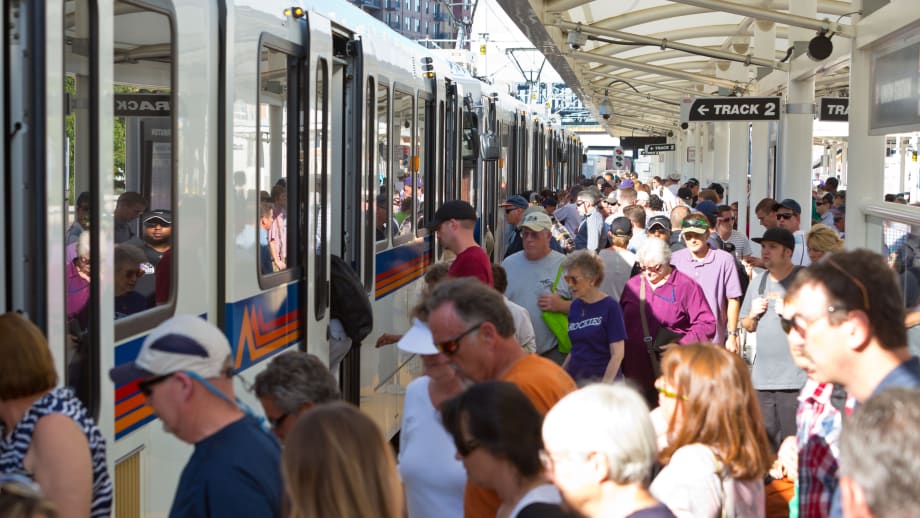
After many reports of declining ridership over the past few years, 2019 has been a year where this trend is starting to turn, including in cities like Denver.
Photo: Denver RTD
6 min to read
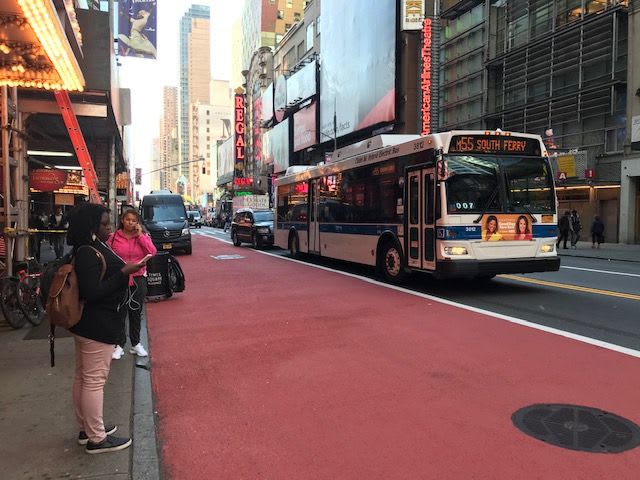
Congestion is becoming a big issue, and public transportation suffers from congestion related slowdown, hurting the appeal of public transportation.
Photo: Janna Starcic
The mobility space is on the move; in recent years it has been changing at a far quicker pace than in the past several decades. Many interesting things are happening on multiple fronts — cities are debating how to accommodate new forms of mobility and their impact, how to better manage street and curb space, and whether and what they should regulate. The social contract between cities and their mobility users is being rewritten. There are more mobility options, all of which impact the planning, funding, and running of public transportation.
With all these changes in mind, here are five predictions for mass transportation in 2020:
1. Data is king and will remain king
Take an entire city and think of the most efficient way to move people around it; from their homes to work, school, shopping, and back home. Think of the routes, timetables, vehicles, and drivers you need to have to manage all of this.
Today, mass transportation routes, timetables, and schedules are planned using data collected from pen and paper surveys, and a laborious months-long process of adding other data sources, such as ticketing and mobile data. As new mobility options emerge, so do reams of data, as well as an open and sometimes heated discussion with regards to who owns this data — cities, transit agencies, or the private mobility operators that generate some of it.
In any case, mobility data proliferation can now be processed using artificial intelligence, which can produce faster insights, much better than humans. Computers are now able to perform tasks they could not perform just a few years ago, helping predict demand, improve OTP (on-time performance), real-time traffic flows, and more.
Anurag Komaduri, principal at Cambridge Systematics, who conducted a survey using location data from five million cell phones in Los Angeles says, “What we know from traditional surveys is, people remember their biggest trips, but what people forget is ‘I'm picking up the laundry,’ ‘I'm stopping to grab coffee.’ We see more of these data captured by cell phones.” And yet, this data is required to provide a complete picture of how people move around a city.
In other words, technology can allow for better, more holistic mobility plans for big metropolitan areas, possibly suggesting better routes and better timetables for mass transportation.
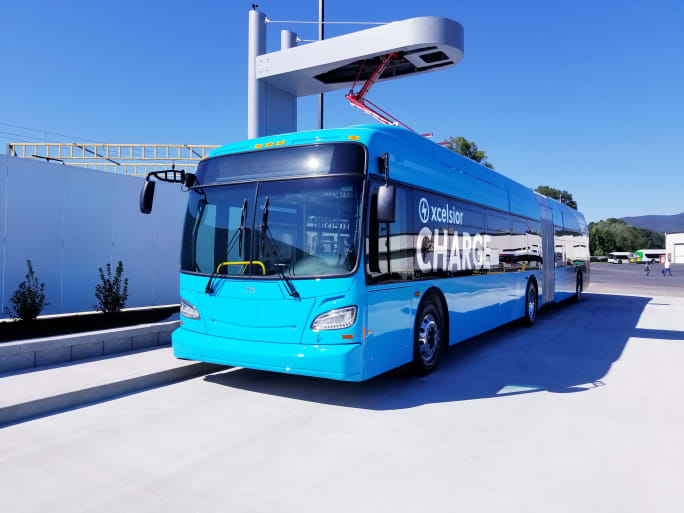
EVs will introduce new technologies for maintenance crews, charging will change how and which depots are used, and how agencies and operators take driver behavior into account and train them.
Photo: New Flyer
2. Climate issues will create an even larger momentum toward electrification
Electric Buses (EVs) are getting more and more traction around the world. China has invested heavily in low-carbon transportation and 99% of the world’s electric buses operate there. The UK has been a leader in decarbonizing its economy with its Climate Change Act (2008), and its continuous legislative commitment to reach net zero greenhouse gas emissions by 2050. In the U.S., the Antelope Valley Transit Authority announced plans for an all-electric fleet and the Los Angeles Department of Transportation has just placed the largest EV order in U.S. history.
Anne Hidalgo, the Mayor of Paris, has committed to making the city carbon neutral by 2050. She is very serious about changing the face of the city, making it friendlier to pedestrians by adding parks and bike lanes to improve mobility. The results are amazing. In 2001, 60% of Parisians owned a car, while in 2019 the number dropped to 35%.
As the Intergovernmental Panel on Climate Change (IPCC) has given the world about a decade to switch over to an emission-free future, decarbonizing mass transit fleets is becoming a central goal.
As cities and agencies prepare for electric buses, the result will be a significant change in how they operate. EVs will introduce new technologies for maintenance crews, charging will change how and which depots are used, how agencies and operators take driver behavior into account and train them (regenerative braking, for instance), and more. The main challenge will be to ensure the high costs associated with EV purchases are offset by using them efficiently, producing as many revenue trips as diesel buses. One of the greater impacts will be changes in scheduling technology, since the constraints brought on by EVs require modern and robust scheduling capabilities, to ensure EV buses support as many revenue hours as diesel buses and that mixed fleets, containing both EV and diesel buses, operate efficiently.
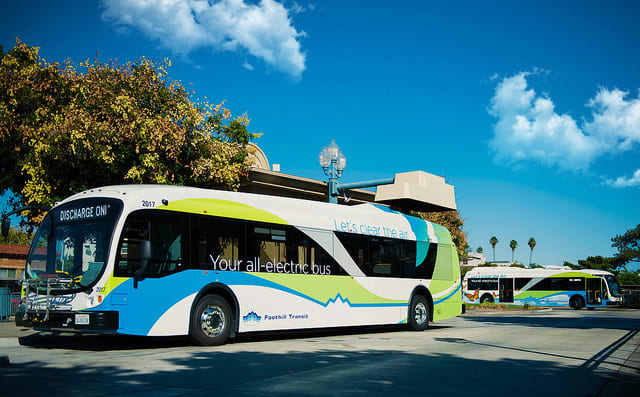
As cities and agencies prepare for electric buses, the result will be a significant change in how they operate.
Photo: Foothill Transit
3. As cities change their perception of public space, their role in controlling it will become central
The new mobility offerings entering cities have transformed how public space is used. Scooters appear in bike lanes or sidewalks and are parked haphazardly on the curb, ride-hailing affects the use of public transit and creates congestion, car-sharing requires designated parking spaces, and more. Most importantly, congestion is becoming a big issue, and public transportation suffers from congestion related slowdown, hurting the appeal of public transportation.
As a result, cities are becoming aware of the increasingly limited public space for traffic. Some cities such as Atlanta are already working on this by giving a preference to the bus. This forces the city to decide what is the best use of public space — private car use? Emissions-free vehicles? Buses? Bike lanes?
In 2019 we’ve seen cities instituting no-emissions zones (affecting EV buses), creating traffic signal preference for public transit, bus-only lanes, and managing the curb. In 2020, this trend will pick up, with a more holistic view of the curb, integrating public transit and mobility needs, giving preference to public transit on the roads.
4. Winning back riders
According to a report by APTA, in the U.S., more than 2.3 billion bus transit passenger trips were taken in the first half of 2019.
After many reports of declining ridership over the past few years, 2019 has been a year where this trend is starting to turn — with a few cities (Dallas, Seattle, Houston, Oakland, Denver, Pittsburgh, San Diego, Newark, and Columbus) showing ridership increases. This trend will grow in 2020, as more cities look at redesigns to improve frequency, connectivity, travel time, and reliability.
The digital transformation the mass transit sector is currently undergoing has made redesigning complex transit networks a lot easier. Understanding demand not just from surveys but from actual data about the movement of people in the city, coupled with cloud-native platforms for route planning, timetables, and scheduling, makes it significantly easier for transit agencies and operators to focus more on improving the rider experience. Many transit redesign projects will take place in 2020.
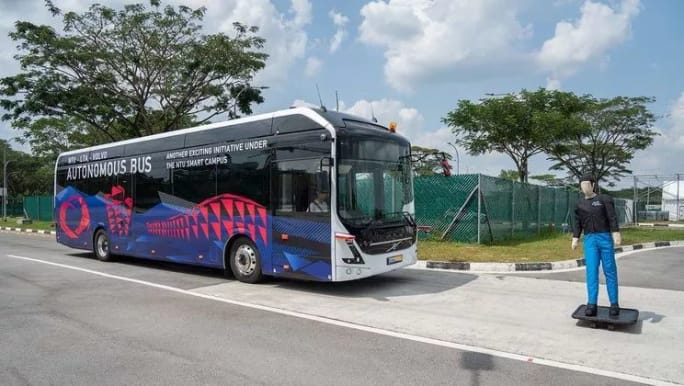
Volvo showcased its autonomous bus capabilities earlier this year in Singapore and then recently with an electric bus that can drive around real depots.
Photo: Volvo
5. No autonomous vehicles in sight
Autonomous or driverless vehicles have been fascinating us for a while. The public transit sector has also been piloting autonomous vehicles; Volvo showcased its autonomous bus capabilities earlier this year in Singapore and then recently with an electric bus that can drive around real depots. We are making progress, but it seems the technology isn’t ready to go mainstream any time soon.
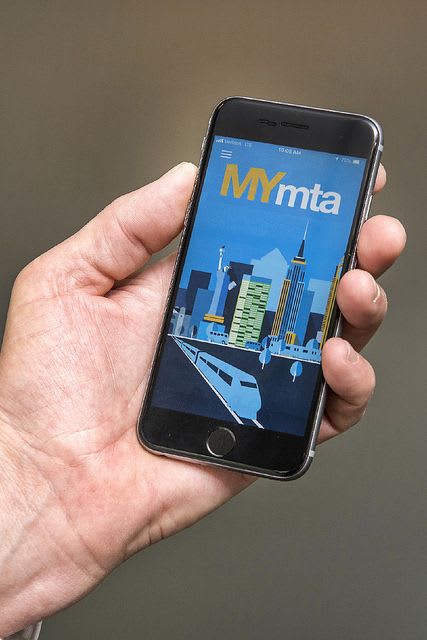
In any case, mobility data proliferation can now be processed using artificial intelligence, which can produce faster insights, much better than humans.
Photo: Patrick Cashin
There is a lot of work to be done until autonomous buses become a part of our everyday life.
Policy makers need to come up with the proper legislation. In the U.S., for example, the self-drive act and the AV start act were both derailed in 2018. Once the regulations are rolled out, cities will need to create the necessary changes to infrastructure to support the AVs, and hopefully by then people’s minds will also shift and they will feel more comfortable with driverless vehicles.
Looking ahead
As technology is changing our lives it will also change the roles and responsibilities of cities and states, especially in the mobility arena.
Regulators should rise to the occasion and make sure their cities offer their people the best mobility it can.
To do so, they need to consider everything from public transit, parking lots, curb management, climate issues (also affecting the pollution in the city) data, infrastructure, policies, regulations, and more.
Many cities are already changing things, because in today's world if you do not change and adapt you are guaranteed to miss the boat…the bus.
About the Author: Amos Haggiag is CEO/Co-founder of Optibus, a Tel Aviv-based company that provides technology to make mass transit operations more efficient.
Subscribe to Our Newsletter
More Blog Posts
Building a Winning FTA Grant Proposal: Why Propane Autogas is the Pragmatic Choice for Fleet Resilience
With $610 million available through the FY 2026 Buses and Bus Facilities Competitive Program and the Low or No Emission Grant Program, agencies must build a compelling case before the September 21 deadline that balances environmental compliance with operational feasibility.
Read More →
Velo-city Conference 2026: Latest Trends in Cycling as Part of Urban Mobility
The global cycling conference highlighted how cities are integrating bicycles into multimodal transportation networks, expanding cycle tourism and reshaping urban mobility.
Read More →
Kindness Isn’t Soft...It’s Strategic.
Mike Bismeyer — often known as “The Kindness Guy” — has spent more than 17 years in public transit and mobility, serving in industry leadership roles, speaking across North America, and advocating for stronger workplace cultures. But his message doesn’t come from theory. It comes from lived experience.
Read More →
Inside ITF 2026: Transport Reacts to A Challenging World
Transport leaders from around the world gathered in Leipzig, Germany, for the 2026 International Transport Forum to discuss resilience, climate impacts, supply chains and the future of sustainable mobility.
Read More →
Every Ride Tells a Story — But You’re Not Just Selling the Ride
You’re selling the moment, the meaning, and the emotion behind it.
Read More →
How Digital Signage is Reshaping the Traveler Experience at Transportation Hubs
What was once a landscape of static signs has evolved into a responsive, immersive environment powered by real-time visual communication.
Read More →
Latest Trends in Urban Mobility from Polis Conference 2025
Polis comprises cities and regions, as well as corporate partners, from across Europe, promoting the development and implementation of sustainable mobility. This year’s event had over a thousand attendees across various policy forums and an exhibition.
Read More →
Why Transit Leaders Require Better Tools for Operational Clarity In Today’s Tech-Fragmented Environment
Across North America and beyond, transit agency officials are contending with a perfect storm of operational headaches and strategic challenges that hamper daily service and long-term progress.
Read More →
The Powerless Brokers: Why California Can’t Build Transit
It is no secret that transit in the U.S. is slow and expensive to build.
Read More →
Why Transport Sustainability Should Focus on People Instead of Cars
Simply incentivizing electrification is not enough to make a meaningful impact; we must shift our focus toward prioritizing public transportation and infrastructure.
Read More →